Ripping
Video download by Jeremy Griffith
Click to zoom
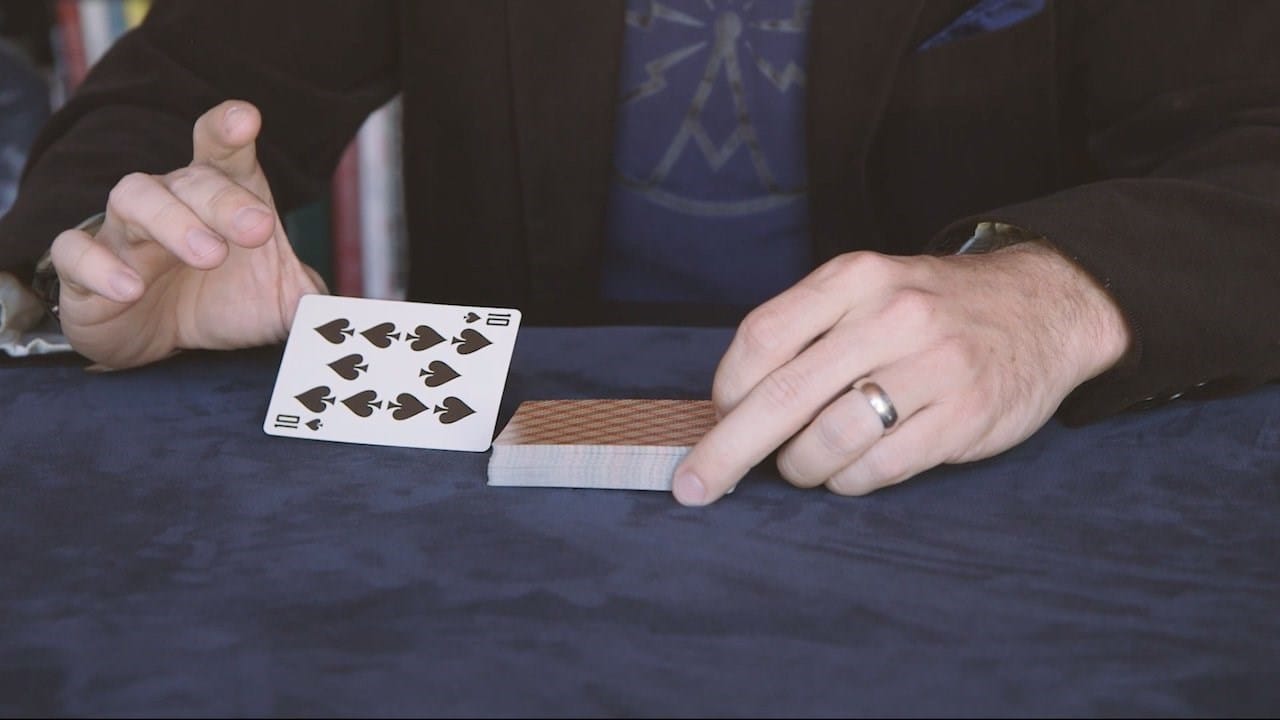
An old and closely guarded technique, used by hustlers and cheats to control cards. No gaffs, preparation, or special decks. Do you have the knack? Sit down with Jeremy Griffith as he walks you through the techniques and his favorite applications for "ripping" the deck.
Also included are a strategies for controlling multiple cards during a shuffle and cut sequence, and Ron Conley, a living legend in the Gambling Protection industry, sits down with Jeremy to discuss brief work and some of the nefarious techniques professional Cardmen used at the card table in his first ever digital release for the magic community.
Add to wishlist
Customer reviews for Ripping

sybil
Ripping allows you to have full control over your selected cards through a very interesting move. this is very well taught and has quite a few applications and its not the hardest thing to get the hang of. Definitely a must have for anybody looking for a Challenging but extremely rewarding sleight

Jonathan
Ripping, by Jeremy Griffith, is a pretty incredible download. What is it? Basically, it is a way to exploit a property of playing cards that allow you to use a standard deck as a stripper deck. Why have you not heard about this until now? Because: 1) it is not easy--this will take a lot of practice, and; 2) it is not obvious--if it was obvious, everybody would be doing it already; 3) it should not work--you really shouldn't be able to manipulate cards this way, but--hot damn--you can.
All that said, Griffith gives you all the tools that you are going to need to learn this technique, but it will still take you a lot of time to get the 'feel' for it. Griffith is an excellent and patient instructor. Everything is explained in detail. The tutorial is about 1 hour and 15 minutes. The instruction goes above and beyond, but, even with crystal clear descriptions, it will still take you a lot of time to get the feel of the technique. I've been doing this on and off for a couple of months. I'm getting better but there is still no way I could use this in real life. It's getting there but it will take time.
The video teaches the technique, but is really just the start. Finding a lost card or cards in the deck is just the tip of the iceberg. This technique allows you to use any card in the deck as an invisible brief (jog) or a locator card. You could even rearrange cards back to original order after a single shuffle... and you can do all this nearly invisibly in front of your spectator and with an ungimmicked deck.
Griffith thoroughly covers the technique and discusses theoretical possibilities. Elliott Terral adds a short coda to the instruction, showing how you can use the ripping technique to lose the four aces in the deck and then secretly move them all to the top. Ron Conley, a gambling expert, demonstrates the power of brief work at the card table. This is a demonstration and not a tutorial, but it gives you the idea of how you could powerfully leverage card briefs (and by extension ripping).
One caveat: READ THIS FIRST if you are buying this as a way to do an antifaro, as this is NOT a pure replacement for an antifaro. If you faroed the deck yourself, you could unshuffle your faro using this technique. But if you are using antifaros, for example, as a way to get from a card stack to new deck order, this is not for you. If that's not enough, using this technique for antifaroing is sort of the ultimate difficulty level for this technique; it is a rockstar move and is far harder than finding 1-4 cards lost in the deck. (I hope to be able to do this at some point, but I am nowhere close to it at this point. It will take a lot of time and practice.)
I am certainly not proficient with this technique, so, perhaps, I should not dole out advice, but the things seem to help are as follows:
1) Use USPCC cards--Griffith advises this
2) Use new cards--newer cards will be easier to manipulate for this technique
3) A borderless design makes this easier--it will allow you to see what you are doing as you are learning the feel of the technique
4) A thicker card stock (think USPCC Bee stock) is very helpful; it will work for thinner stocks too, but I found the technique much easier on thicker cards
5) Try to lose a set of 3 or 4 cards together (lost as a group in the same part of the deck) and recover the set of four before you go for single cards. Work down to 3 and then 2 and then 1. Griffith doesn't suggest this, but it's easier to get the feel for what you are doing with a larger group of cards. Once you get the feel for it, extracting one card is much easier.
All that said, Griffith gives you all the tools that you are going to need to learn this technique, but it will still take you a lot of time to get the 'feel' for it. Griffith is an excellent and patient instructor. Everything is explained in detail. The tutorial is about 1 hour and 15 minutes. The instruction goes above and beyond, but, even with crystal clear descriptions, it will still take you a lot of time to get the feel of the technique. I've been doing this on and off for a couple of months. I'm getting better but there is still no way I could use this in real life. It's getting there but it will take time.
The video teaches the technique, but is really just the start. Finding a lost card or cards in the deck is just the tip of the iceberg. This technique allows you to use any card in the deck as an invisible brief (jog) or a locator card. You could even rearrange cards back to original order after a single shuffle... and you can do all this nearly invisibly in front of your spectator and with an ungimmicked deck.
Griffith thoroughly covers the technique and discusses theoretical possibilities. Elliott Terral adds a short coda to the instruction, showing how you can use the ripping technique to lose the four aces in the deck and then secretly move them all to the top. Ron Conley, a gambling expert, demonstrates the power of brief work at the card table. This is a demonstration and not a tutorial, but it gives you the idea of how you could powerfully leverage card briefs (and by extension ripping).
One caveat: READ THIS FIRST if you are buying this as a way to do an antifaro, as this is NOT a pure replacement for an antifaro. If you faroed the deck yourself, you could unshuffle your faro using this technique. But if you are using antifaros, for example, as a way to get from a card stack to new deck order, this is not for you. If that's not enough, using this technique for antifaroing is sort of the ultimate difficulty level for this technique; it is a rockstar move and is far harder than finding 1-4 cards lost in the deck. (I hope to be able to do this at some point, but I am nowhere close to it at this point. It will take a lot of time and practice.)
I am certainly not proficient with this technique, so, perhaps, I should not dole out advice, but the things seem to help are as follows:
1) Use USPCC cards--Griffith advises this
2) Use new cards--newer cards will be easier to manipulate for this technique
3) A borderless design makes this easier--it will allow you to see what you are doing as you are learning the feel of the technique
4) A thicker card stock (think USPCC Bee stock) is very helpful; it will work for thinner stocks too, but I found the technique much easier on thicker cards
5) Try to lose a set of 3 or 4 cards together (lost as a group in the same part of the deck) and recover the set of four before you go for single cards. Work down to 3 and then 2 and then 1. Griffith doesn't suggest this, but it's easier to get the feel for what you are doing with a larger group of cards. Once you get the feel for it, extracting one card is much easier.

Jeffrey
Jeremy gives a stellar deep dive on this stunning but tricky technique. Admittedly, it was the prospect of figuring out what was involved in the ripping anti faro that brought me here, but now that I understand what makes this possible, I realize that this is so much more powerful than that. This video is a really great value.
I would also like to add a few tips that I noticed that gave me enough early success to know that I should keep going with this.
The first thing that helped me to rip that first card was standing the deck up vertically on the table while gripping lightly at the base to keep it from falling over. I just felt that this kept the deck nice and square and eliminated some variables that might interfere with feeling what you need to feel.
The second tip is not to overdo the rocking motion. If you end up with significant gaps between the cards, you can definitely get some false positives, especially if you're gripping too hard as you try this technique.
Third and final tip, practice under good lighting. There are some things that Jeremy points out in passing that I found very helpful to observe directly, especially when doing this with a bordered standard bicycle deck. With optimal lighting, and good eyesight, you can see what it is you're eventually supposed to feel, and it helps you to understand which direction to hold the deck early on. Eventually, I think you'll just get used to paying attention to the orientation of the deck or will be able to adjust your grip on either side to quickly and consistently rip your target cards from the deck.
I would also like to add a few tips that I noticed that gave me enough early success to know that I should keep going with this.
The first thing that helped me to rip that first card was standing the deck up vertically on the table while gripping lightly at the base to keep it from falling over. I just felt that this kept the deck nice and square and eliminated some variables that might interfere with feeling what you need to feel.
The second tip is not to overdo the rocking motion. If you end up with significant gaps between the cards, you can definitely get some false positives, especially if you're gripping too hard as you try this technique.
Third and final tip, practice under good lighting. There are some things that Jeremy points out in passing that I found very helpful to observe directly, especially when doing this with a bordered standard bicycle deck. With optimal lighting, and good eyesight, you can see what it is you're eventually supposed to feel, and it helps you to understand which direction to hold the deck early on. Eventually, I think you'll just get used to paying attention to the orientation of the deck or will be able to adjust your grip on either side to quickly and consistently rip your target cards from the deck.