UK Creator Interviews Hub
Go behind the scenes with some of the UK’s most respected magicians and creators in our collection of UK magician interviews.
Each interview explores how these performers discovered magic, developed their creative process, and turned their ideas into routines used by magicians around the world. You’ll also hear their thoughts on performing, creating original material, and the people and experiences that have shaped their careers.
Whether you’re looking for a British magician interview, want to learn more about your favourite creator, or are interested in how professional magic is developed, this page brings together conversations with leading names from across the UK magic community.
Explore the interviews below, discover more notable UK magicians, read the latest articles on our magic blog, or see which creators are appearing at upcoming UK magic events and The Session.
Andi Gladwin

How has your approach to magic changed since you co-founded Vanishing Inc.?
When we started Vanishing Inc., I was performing more for magicians than for lay audiences. That means that I became interested in fooling magicians. That’s a natural phase for a lot of us. But over time I’ve become much more interested in how magic makes people feel.
Running Vanishing Inc. has given me a front-row seat to so many different styles of magic and performance. It has reinforced that there isn’t one “right” way to perform. The best magicians all have completely different approaches, but they have one thing in common: they’re authentic. They lean into who they are rather than trying to imitate someone else.
These days, I’m much more interested in creating memorable experiences than clever tricks.
What do you look for when deciding whether a new trick, book, or creator is right for Vanishing Inc.?
The first question is always, “Does this move magic forward?”
That doesn’t necessarily mean it has to be revolutionary. Sometimes it’s a genuinely new method, sometimes it’s a fresh presentation, and on occasion it's an entirely new plot or idea. But we want to publish material that deserves to exist.
With creators, we’re looking for people who genuinely care about their work. The best creators are usually obsessive. They’ve thought through every detail, they’ve tested it extensively, and they care deeply about getting it right.
We also think about longevity. We’d rather publish something people are still talking about in ten years than something exciting for ten days.
You have worked closely with many of the world’s leading magicians. What qualities do the best creators tend to share?
Curiosity is probably the biggest one. The best creators never stop asking “What if?” They’re constantly experimenting, and they’re rarely satisfied with the first solution they find.
Humility is another surprisingly common trait. Many of the biggest names in magic are also the quickest to admit they don’t have all the answers. They’re always learning.
Finally, they care about details that most people never notice. They know that changing a single word in a script or moving a prop six inches can completely change how an audience experiences a piece of magic.
How do performing, creating magic, and running Vanishing Inc. influence one another?
They’re impossible to separate.
Performing keeps me focused. It’s very easy to create something that sounds great when I explain it to friends, but doesn’t survive contact with a real audience.
Publishing exposes me to an incredible range of ideas. Every year we work with dozens of brilliant creators, and that inevitably influences how I think about magic.
Running the business also reminds me that magic is ultimately about people. Whether it’s customers, authors, performers, or audiences, every decision comes back to creating something that genuinely improves someone’s experience.
What role have events such as The Session played in bringing the UK magic community together?
That was always the goal.
When we started The Session, we wanted to create something that felt less like a convention and more like a gathering of friends. We deliberately kept it small enough that people would actually meet each other instead of just sitting in lectures all weekend.
One of the nicest things has been watching friendships form that have lasted for years. People have started companies together, written books together, travelled together and become lifelong friends because they happened to meet at one of our events.
And it has been especially fun to see magicians grow. For example, there are magicians who have been coming to our events since they were kids that are now famous, highly-respected magicians in their own right. Even FISM winners, and TV stars like Dynamo. That's pretty incredible to be a small part of.
Magic is often thought of as a solitary hobby, but it doesn’t have to be. Building communities has been one of the most rewarding parts of what we do.
What do you hope Vanishing Inc. contributes to magic over the next several years?
I hope people continue to see us as a trusted home for great magic.
We’ve never wanted to publish everything. We’d rather publish fewer things and make sure they’re genuinely worthwhile.
Beyond that, I’d like us to continue preserving important work, supporting new voices, and creating opportunities for magicians to learn from one another. Magic has an extraordinary history, but it also has an exciting future. If we can help connect those two things, I’ll be very happy.
Ultimately, I’d like people to feel that Vanishing Inc. left magic a little better than we found it. That’s been our goal from the beginning, and it's mine and Josh's main job to ensure we don't stray from that.
Want to discover more from Andi Gladwin?
Visit Andi's creator page to explore their magic tricks, books, downloads, lectures, and other releases available from Vanishing Inc.
Andrew Frost

For years, many magicians knew you as @sleightlyobsessed, where you became known for refined sleight of hand. How has your relationship with technical card magic changed as you have moved into writing and performing full-length shows?
I don't think it has changed much, to be honest. I have done some ridiculous variation of a DPS in every show I have written. I still love hard sleight of hand and continue to learn new sleights. I think the biggest shift has actually come from meeting people like Gian Carlo Scalia, Yann Frisch, and Arthur Chavaudret, and trying to approach sleight of hand in a way that feels completely coherent with how I act and move, and less like you are showing off your work. Nothing those guys do looks like a move, and that makes me feel insecure.
How has being part of the British magic community influenced your approach to card magic?
The British scene is one of the very best in the world. The obvious names clearly influenced me: Guy Hollingworth, Ben Earl and Joe Barry. However, my most informative period in magic was in London, where Ross Taylor, Brad Hodgins, Jack Tighe, Christian Grace, and Alex Hansford met regularly. Ross Taylor is the closest thing I have had to a mentor in magic. In-person experiences of having your brains blown to bits are so important to remind you of what you are aiming for, and Ross continues to be my north star.
How did taking The Greatest Card Magician in the World on tour change the way you think about performing magic?
My first show, “Cards on the Table”, was a very gentle show with a bunch of tricks stacked together. The Greatest Card Magician in the World was my attempt to write a show with narrative structure and a more developed persona, and I wanted to perform card magic without using a table. I was also aiming for the show to be more comedic and brought on Tom Parry, a fantastic director, sketch comedian, and stand-up, to direct it. Basically, everything about the show changed the way I thought about performing magic. One thing I feel very strongly about after touring/ performing “The Greatest Card Magician in the World” is that magic should be seen as a collaborative art form. No one who is any good at magic creates in a vacuum. Oh, and also, if you name a show something clearly ironic, expect magicians to take it at face value.
How do you take an initial idea and develop it into something ready for an audience?
Slowly and with a LOT of failure. Guy Hollingworth also seems to always come to my very early work-in-progress shows, and I am pretty sure he thinks I am an unfunny, terrible magician. I think part of being a performer is just a willingness to completely humiliate yourself and be resilient enough to change it and do it again. I also wish I could say it gets easier the longer you do it, but actually, the failures just become more public.
What do you think makes the current UK magic scene exciting?
I feel a bit removed from the magic scene these days, but there are some very clever people doing very exciting stuff. I would keep an eye on what Brad Hodgins is doing with Card Games and anything else he is doing. Brad is maybe the best card magician I have ever met, and him releasing any material is as surprising as it is refreshing.
Want to discover more from Andrew Frost?
Visit Andrew's creator page to explore their magic tricks, books, downloads, lectures, and other releases available from Vanishing Inc.
Ian Kendall

What originally drew you toward sleight-of-hand magic?
I started with very basic magic effects when I was about seven years old - the usual stuff we all did at that age a French drop coin vanish, or the Four Thieves card trick). When I was sixteen, I discovered more technical sleight of hand, and I became very quickly obsessed. I enjoy challenges, and I have no problem focusing on long practice sessions, so it was a natural fit. It was my hobby for about seven years before I started working professionally.
How do you approach teaching technically demanding material in a way that feels manageable?
I'm quite lucky in that the first two teaching qualifications I did were as a fencing coach, and then I learned the British Army way of teaching; both of these focus on taking complex actions, breaking them down into their constituent parts, and learning them one step at a time. I took this approach and applied it to sleight of hand, and the approach works. For example, my first lesson in my Basic Training column for MUM was on the Ghost count (or Elmsley count). Most resources cram the whole move into one or two paragraphs and teach it as a whole; my approach was to break it down into five distinct parts, and then teach each one on its own, and then gradually add them together to build up the move.
In “BHMME,” you tackle sleights that many magicians find intimidating. How do you decide whether a difficult move is worth the time required to learn it?
BHMME started as a joke back in 2004; there were three moves that I did that were notorious for being challenging; Top Shot, the Simple Switch, and the Cascade Control. At the time none of them had been taught on video, and I thought there was a gap in the market. I tracked down the three creators (which was a task in itself; Lennart Green didn't have a computer, Paul Harris doesn't have >anything<, and Paul Chosse was the easiest to find!) to ask permission to video the moves, and made the VCD (this was before DVDs!) While I still use all three moves, I recognise that for most people they are 'Session moves', and that's fine. We all spend a lot of time learning moves that we never use under fire, because it's fun :) The title got me some heat at the time, but it's more accepted these days. I wanted to riff on the Michael Ammar / Mike Maxwell VHS titles that were all the rage at the time. For what it's worth, I think it's accurate - I know several people who said that they could only master the moves after watching my video.
What advice would you give to a young magician hoping to build a professional performing career in the UK?
That's a really hard question! Things are >so< different now to when I started in the early 90s. There is a much greater emphasis on social media and various online activities, and there are fewer table-hopping gigs at restaurants where you can hone your skills. Most of my advice - in a general sense - is not what people want to hear; the most important thing is to be >ready<. By that I mean that you need to have skills and performing experience so that you can deal with unforeseen things that >will< crop up in gigs. If you have been performing for people in a social setting - not just practicing - for less than two or three years, then I would confidently suggest that you are jumping the gun (and now you see why people don't like my advice on this!). Make sure you >want< to do this; it's not an easy life, and as the saying goes, once something becomes your job, a lot of the joy gets sucked out of it. Make sure that you are good at the business side; you have to be a marketing expert now more than anything. If you do decide to make that move, be >very< easy to work with. Turn up early, be efficient and helpful, and don't give anyone attitude - that's the best way to end your career. Try to be as >you< as you can; I'm not saying you need to have 100% original material, but if you are using bought effects (and there's nothing wrong with that), try to come up with a presentation that suits >you< - the further you can get from being Derek Generic, the better.
Which of your books, downloads, or routines would you recommend as the best introduction to your work?
If you are looking to start with ungimmicked coin magic, then I'm very happy with Basic Coin Magic (the original was my first VCD in 2004). For general magic, my book Basic Training is a collection of my MUM columns that covers mainly techniques, and Braindump is my collection of professional routines from the last 30 years. I have a couple of books that are focused on stage magic theory, and some hardcore sleight of hand stuff, but they tend to be more of a niche market :)
Luckily, Vanishing Inc have a nice bundle of some of my downloads, which is a good starting point :)
Want to discover more from Ian Kendall?
Visit Ian's creator page to explore their magic tricks, books, downloads, lectures, and other releases available from Vanishing Inc.
Mark Shortland
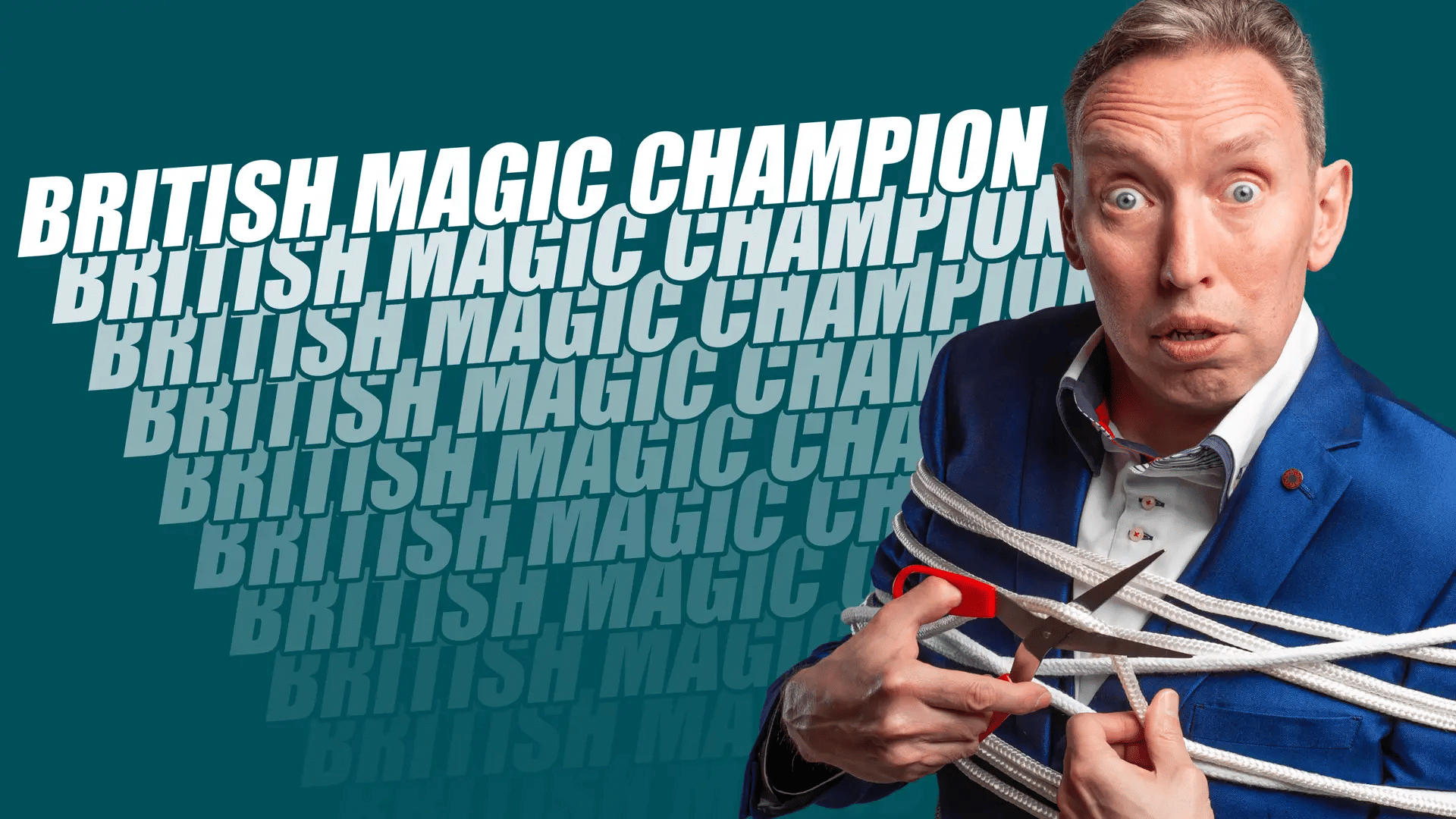
You began your professional career after winning the British Magical Championships in 2005. How did that achievement help you establish yourself as a professional magician in the UK?
I actually turned professional in 2000 when foot and mouth disease in the UK killed the outdoor pursuits industry I was working in at the time. I had done quite well in competitions up to that point winning the IBM Stage Magician of the Year and Close-up Magician of the year in 2001 and 2002 respectively. The British Championships in 2005 was a big thing then. I didn’t know winning your category gave the chance of winning the entire competition. so after I won the Comedy section, I went back to my dressing room to pack away, someone had to come and find me to tell me I had won the whole thing. I remember Rick Thomas coming on stage and stealing the trophy from me as it was presented (he was my volunteer in my act, you had to be there!) It was very funny.
There was an agent in the audience who contacted me after the competition, asking if I would be interested in doing cruise ships, that's what really established my career, I have been doing them ever since.
Amazebox remains to this day one of the best-selling products of all time. What did the development of it teach you about creating practical magic for other performers?
The AmazeBox is something I created for me to use as there was nothing on the market that did what I wanted it to do. I had no thought of selling it to other magicians. It was a friend of mine who said I should market it, and so I contacted Andi Gladwin as a friend and said “I have this box I am thinking of producing, is it any good? How many do you think I could sell? Shall I get 10 or 50 produced. He and Josh loved the box and said they would like to work with me on the production, and the rest is now magic history!
The main thing we all thought would be good for the design and for other users is having the box pack flat. My original box was solid and it was the box company that said “Do you want this to pack flat?” We said yes and the design became a lot more complicated. But I think it was worth it.
You have appeared on both Britain’s Got Talent and Penn & Teller: Fool Us. How does creating magic for television differ from performing a live stage show?
Honestly, I don’t see a difference, and that’s why I am not a consultant on TV shows. For me it is all about the enjoyment for a live audience. I try to create routines that can be performed anywhere, rather than just on the TV or on a screen. The BGT chair routine came about because no one had ever moved the judges to a different order, they have their own chairs and positions. Both my Penn & Teller performances have used routines from my live stage shows.
How has your experience performing at major events shaped your approach to magic?
I don’t think it has shaped what I do. I know what I am good at and I did that. If someone asks me to do something else, I will find them a performer who will be able to do a better job than me. I would rather the client and audience had a positive experience of magic, than me be mercenary and doing it for the money.
What advice would you give to someone hoping to build a career as a comedy magician in the UK?
I’m not sure. I do not class myself as a comedy magician. I am a magician who is sometimes funny.
If someone hires a magician and then they are funny as well, that's a bonus. If someone hires a comedy magician and they are not funny, that’s bad.
Comedy is very subjective and difficult to please everyone.
The best advice I got (from John Archer and Tim Vine) is be yourself and write your own lines. Don’t copy others. If you use all the well known lines, they may get a laugh from those that have not heard them before, but eventually you will end up on the same bill as another performer using them. and then it gets awkward. Especially if you are on first and it’s their original line!
Writing comedy is hard and takes a lot of work and commitment, and that’s why there aren’t many truly original comedy magicians.
Want to discover more from Mark Shortland?
Visit Marks's creator page to explore their magic tricks, books, downloads, lectures, and other releases available from Vanishing Inc.