A Problem Called Equivoque
By Hector Chadwick -
I sometimes like to categorise magicians based solely on how they pronounce the word ‘equivoque’.
For example, if you say, ek-wi-vock, I think of you as a vocker, and, in my experience, you’re quite a rare breed. If you say ek-wi-voak, I think of you as a voaker, and if you say ek-wi-vokay, I call you a vokayer. I don’t judge you for your chosen pronunciation, by the way. I occasionally see sneering comments online, magicians aghast at their peers, utterly exasperated that anyone could possibly be stupid enough to pronounce the word that way. You’ll get no such awfulness from me. In fact, quite the opposite.
I hereby give you the unassailable right to pronounce the word however you darn well please, and if someone is brassy enough to tell you you’re saying it wrong, then they must have been entirely certain what you were referring to in the first place—and so your meaning was already perfectly clear, rendering the so-called correction redundant.
I’m a voaker myself (I come in peace!), although in French—and it is a French word—the ‘oque’ sound is pronounced closer to ‘ock’ than ‘oak’, which would seem to give the vockers the strongest argument. But no one can really lay claim to remaining true to the French pronunciation because we simply don’t say the word in the same way. In English, there’s a cheeky little ‘w’ sound hiding in any word with a ‘qu’ in it. Quick. Queen. Quiz. We pronounce these, ‘kwik’, ‘kween’, and ‘kwiz’. In French though, you don’t pronounce the ‘w’ sound in ‘qu’ words, and so ‘equivoque’ is pronounced ‘eh-kee-vock’. I’ve yet to hear any native English speakers quite cavalier enough to pronounce it that way, but they have my full support should they choose to do so.
What then of the vokayers? The dearly missed Max Maven was himself a vokayer, and I’ve heard it said that he enjoyed that particular pronunciation because it serves to identify one’s use of the term as a specific technique relating to the world of magic, as opposed to its more flexible meaning elsewhere. And if nothing else, as I point out in my own poem on the subject, ek-wiv-o-kay is fun to say.
And so perhaps, since we seem unlikely to ever come to a consensus, we should just call it magicians choice and be done with it. A sensible solution. Let’s do that. All we need to decide is where we put the apostrophe and draw a line under the whole silly affair. Except… where do we put the apostrophe? Let’s consider our options.
Before the S: Magician’s choice
We could make the case that the choice refers to a single magician using the technique at that particular moment in time. It is not the participant’s choice, rather it’s the magician’s. Apostrophe-S seems right then.
After the S: Magicians’ choice
But then surely the technique cannot belong to a single individual? Countless magicians have developed and used the technique over the years. We are, are we not, more than one magician? My laptop’s grammar-checker certainly wants the apostrophe after the S. S-apostrophe it is!
No apostrophe: Magicians choice
But then perhaps we don’t own the technique at all. Perhaps this is not a choice belonging to magicians, but rather a choice for magicians. And in that case, since no possession is involved, no apostrophe is required.
All three arguments seem equally sensible to me, but I prefer to omit the apostrophe altogether, because I’m a busy man and like to save myself time wherever possible.
So! There’s no agreed pronunciation of the word ‘equivoque’, and we have no unified approach to the use of an apostrophe in the term ‘magicians choice’. The terms are as slippery as the method they refer to. Satisfying as that may be, where does it leave us? Are we destined to fight the pronunciation war forevermore? Do we spend sleepless nights fretting over the best place for our apostrophe? Thankfully, I have the perfect solution. Consider the following.
Your pronunciation of the word ‘equivoque’ vanishes without a trace the moment you write it down. And—unless the light catches it just right—you will rarely see an apostrophe when spoken aloud. So the solution is simple: we write the word ‘equivoque’, but we say ‘magicians choice’, thus ending all related debate in its entirety forevermore. This is a new rule, effective immediately, that every magician without exception must adhere to from this day forth.
Now all I have to do is enforce it.
Editor's Note: Hector Chadwick's delightful book has just been reprinted. Here is where you may purchase it:
Reader comments

Larry Kugelman
Thank you so much for elucidating and bringing into the light of day, The rarely debated, proper pronunciation of Eck-wi-voke or E-kwiv-uh-kay.

Jesse McKenney
I want to meet the vockers…

Devin Bray
I'm a "vokayer," but for a different reason than Max. For me, it just makes sense because in English, we have the word "equivocation," which refers to the very act being engaged in by magicians in these contexts. To arrive at my preferred pronunciation, all you have to do is chop off the last syllable. One ends up closer to a well-known English word, but further from sounding French and fancy. A trade-off, to be sure!

Chris Clarke
It’s pronounced- ‘equivoque’, like ‘gif’

Derek Renfro
No, it's "gif."

I’m in the minority and am a “vocker” without a “w”, but have always enjoyed the way E-kwiv-uh-kay rolls off the tongue.

Jonathan Lebowitz
As to naming, you can do what they decided to do in medicine: instead of Parkinson's disease or Down's syndrome, they are now (officially) called 'Parkinson disease' and 'Down syndrome.' So here's a vote for 'magician choice.' As to pronouncing 'equivoke,' this is very similar issue as to how academics pronounce the name Cervante's classic novel Don Quixote. If you are speaking Spanish, the 'Q' word in the title sounds like, 'kee-ho-tay.' When academics in the USA speak of the novel they refer to the 'Quick-sote,' which sounds more like a breakfast cereal than a book. (I took a contemporary civilization course in college with a professor, a native Spanish speaker, who hailed from mainland Spain. Because he was discussing Cervante's work in English at an academic center in North America, even he pronounced it like the breakfast cereal for the entirety of the course.) So rather than equivocate extensively on exact articulation and risk expediently exhuming an excess of extemporaneous expletives on the matter, I'm sticking with pronouncing 'equivoque' as 'magician choice' in order to avoid any controversy....

Aaron Davidson
I'm an American with a creative writing degree, and I have never heard anyone pronounce "Quixote," "kwik-sote." I've only ever heard "key-HO-tay" from my professors and peers.

I personally didn't know there was a debate on the pronunciation of equivoque, but I am what you called a "voaker." I also pronounce baroque and monocoque in the same manner. This is because the "voake" pronunciation of words ending in -oque dates back to the 5th and 15th centuries (aka the Middle Ages), and I am kind of a history nut.

I pronounce it, like “it”

Michael Kebblewhite
I think how it's pronounced is entirely the magician's choice.

Robert Thompson
How would you like to pronounce it? "ek-wi-voak" or "ek-wi-vokay"? "ek-wi-voak", you say? Ok you pronounce it "ek-wi-voak", and I'll pronounce it "ek-wi-vokay" -Rob
Leave a comment
to post a comment.
Similar posts on the blog

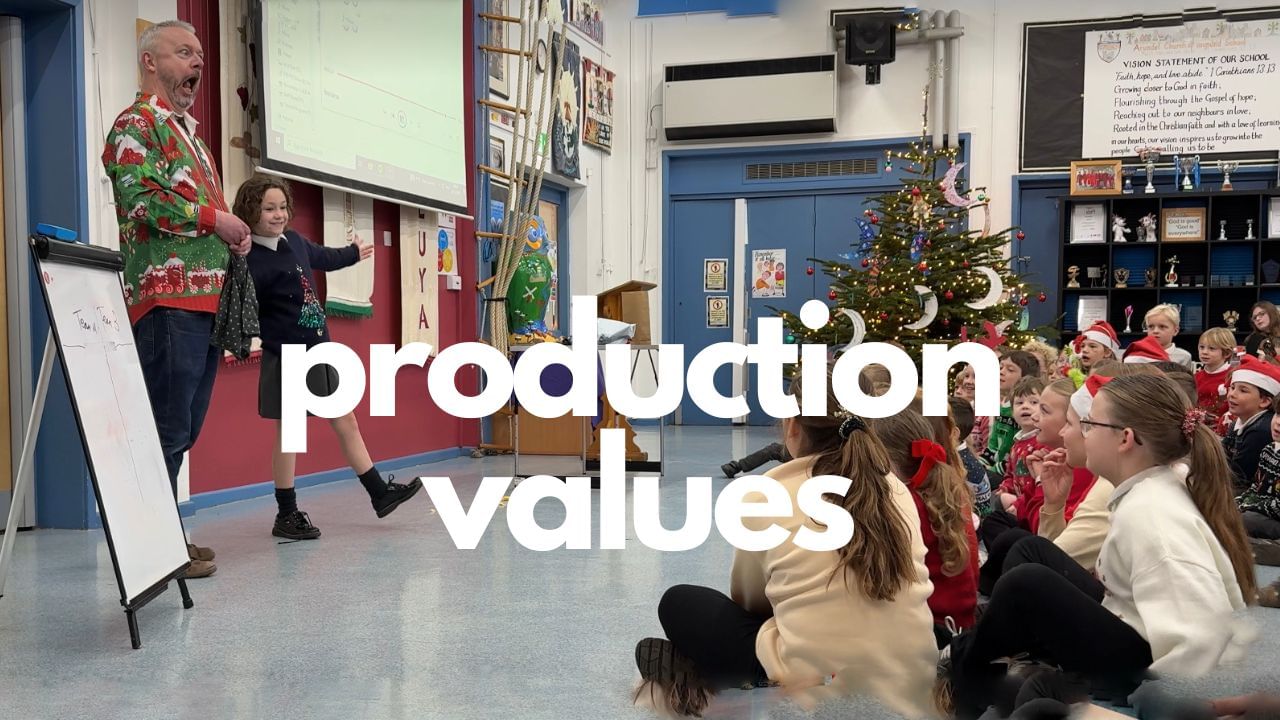
How Magic Cue Transformed My Magic Shows: A Magician’s Guide to Show Control Systems
Damian Jennings - 11-Apr-2025
Category: About Vanishing Inc.
How I upgraded my show's production values


$1,000 Magic Shopping Spree
Vanishing Inc. - 27-Mar-2025
Category: About Vanishing Inc.
What would you do if you had $1,000 to spend on new magic tricks?


Principles of Killer Magic - Bonus Edition
Mitch Praver - 05-Feb-2025
Category: About Vanishing Inc.
A captivating look at the common human tendencies that might be holding your magic back.

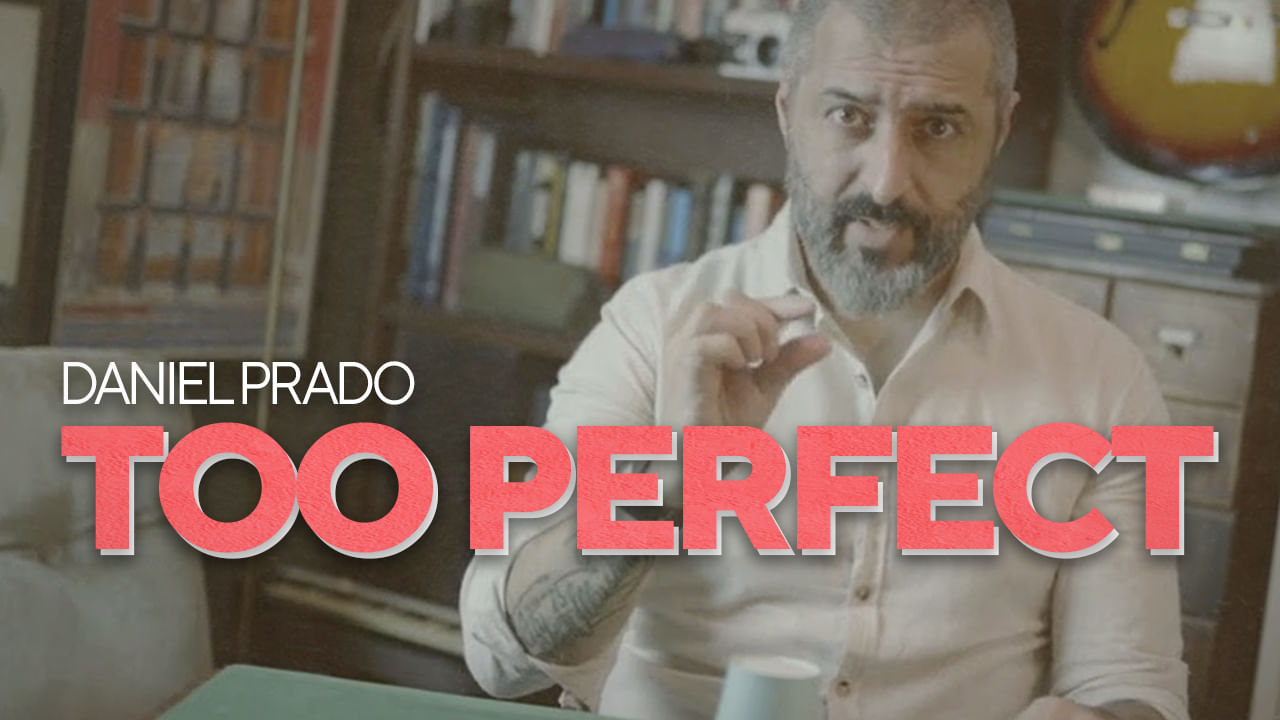
No Such Thing as Too Perfect
Daniel Prado - 03-Feb-2025
Category: About Vanishing Inc.
Daniel Prado discusses the illusion of impossibility and the flaws of pursuing perfection.